
What is clubfoot?
IClubfoot — medically called Congenital Talipes Equinovarus (CTEV) — is a condition where one or both feet are twisted inward and downward at birth. The foot points down, the heel turns inward, and the forefoot curves toward the midline. It looks more alarming than it is, but without treatment it will prevent normal walking.
Clubfoot involves four components, remembered with the acronym CAVE: Cavus (the arch is abnormally high), Adductus (the forefoot points inward), Varus (the heel tilts inward), and Equinus (the foot points downward). Successful treatment must correct all four — and it does so in a precise, specific sequence.
Clubfoot affects approximately one in every thousand live births worldwide — making it one of the most common congenital orthopaedic conditions. It is twice as common in boys, and around half of all cases affect both feet. In the majority of cases there is no identifiable cause and no other health problem — it is not caused by anything a mother did or did not do during pregnancy.
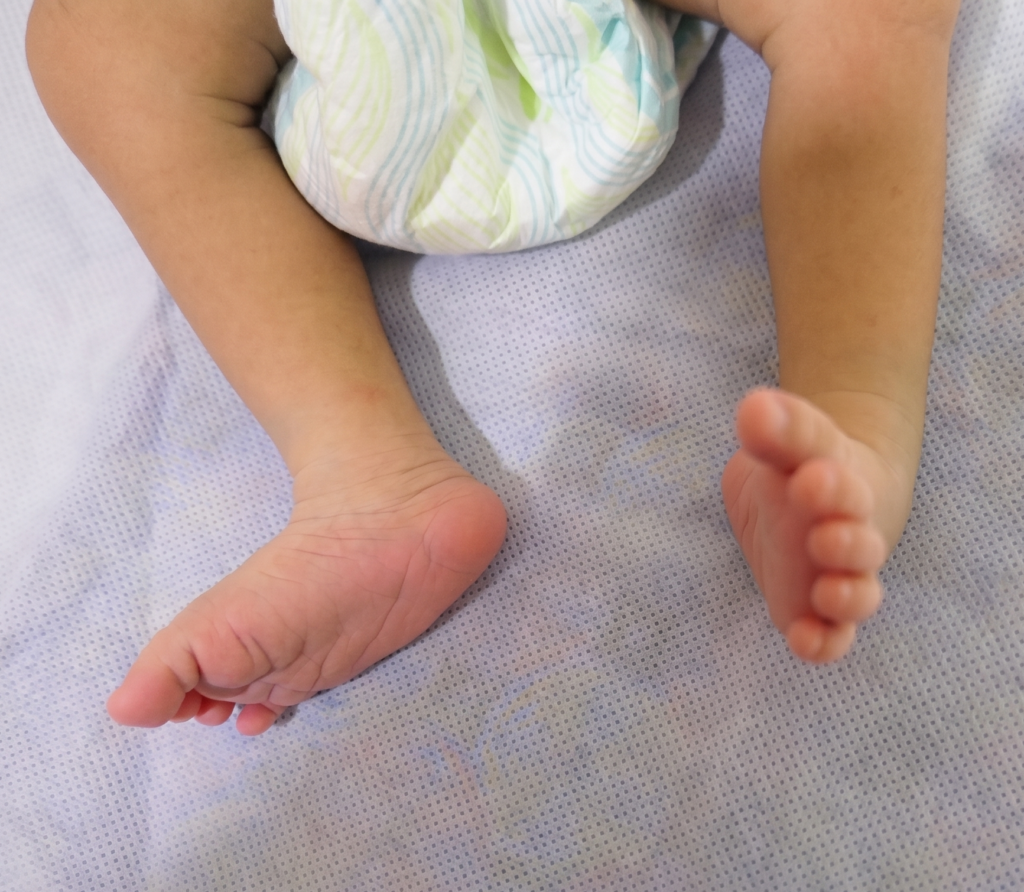
Figure 1: Newborn with Left Clubfoot.
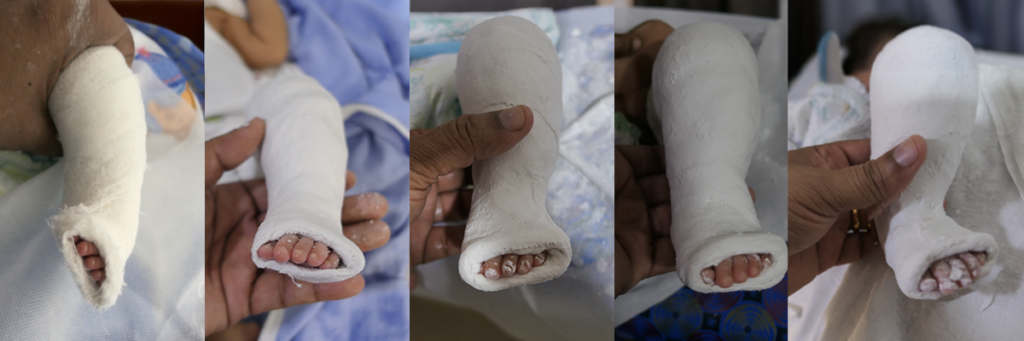
Figure 2. Weekly Cast Changes During Clubfoot Correction
The image shows the series of casts applied at weekly intervals as part of the Ponseti method for correcting the clubfoot. Each cast gradually improves the position of the foot through gentle moulding and stretching, allowing progressive correction of the deformity.
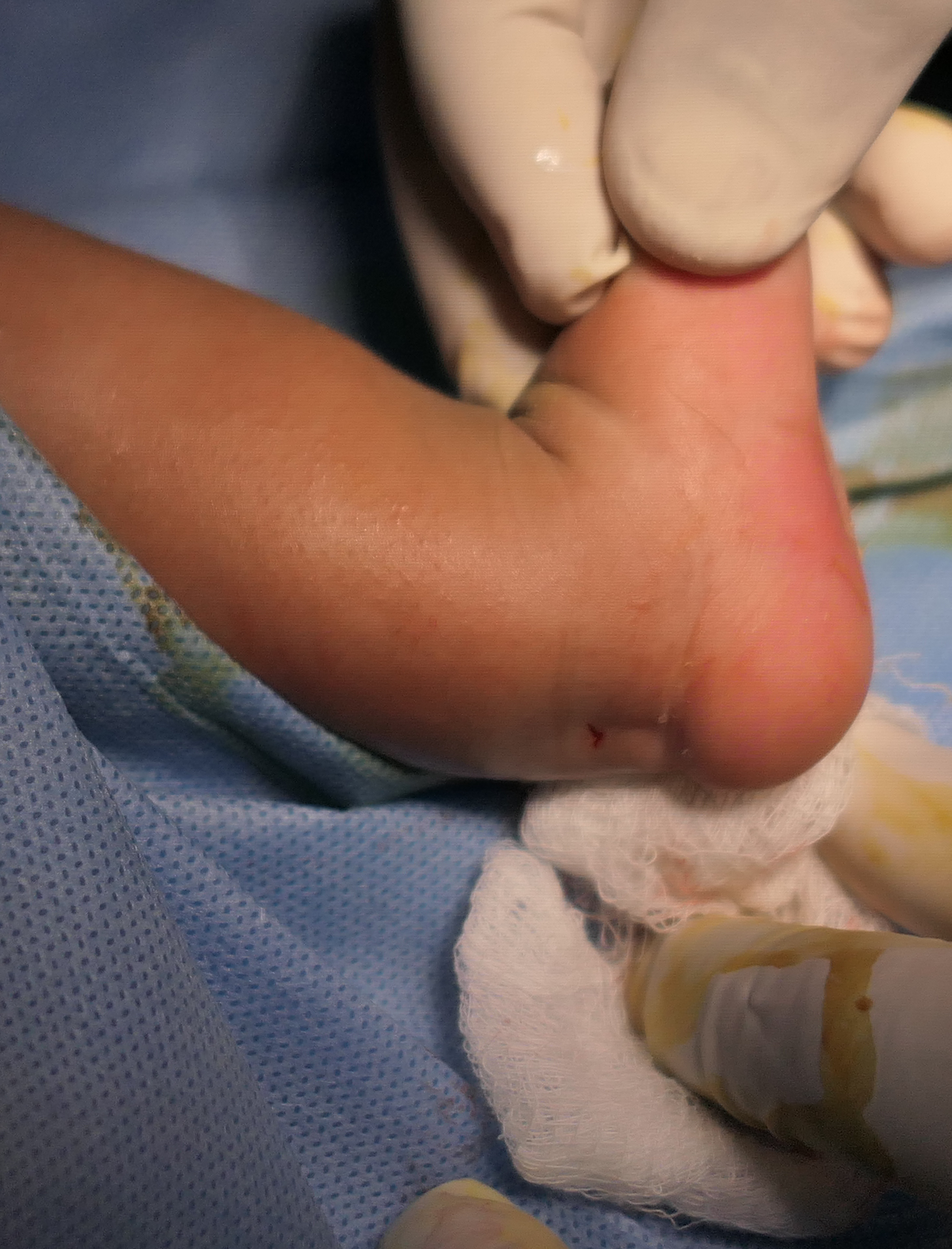
In approximately 90% of children with clubfoot, the Achilles tendon is too short to allow the foot to reach a neutral position — even after the casts have corrected everything else. In these cases, a minor procedure called a percutaneous tenotomy is performed. Using a very fine needle and local anaesthetic cream, the tight tendon is gently released. The entire procedure takes less than a minute. A final cast is worn for three weeks while the tendon heals in its new, correct length — and it grows back stronger and permanently longer.
The tenotomy sounds alarming when first described, but it is an extremely minor, safe, and well-established step in the Ponseti protocol. Your baby will experience minimal discomfort, and the tendon heals fully and permanently.
After the tenotomy, the final cast is given for 3 weeks. The cast is given in fully corrected, or rather over corrected position. Routine plaster care is taught to the parents every time a cast is applied, and they are also given instruction to immediately remove the plaster by wetting it, if any redflag signs of plaster complications happen
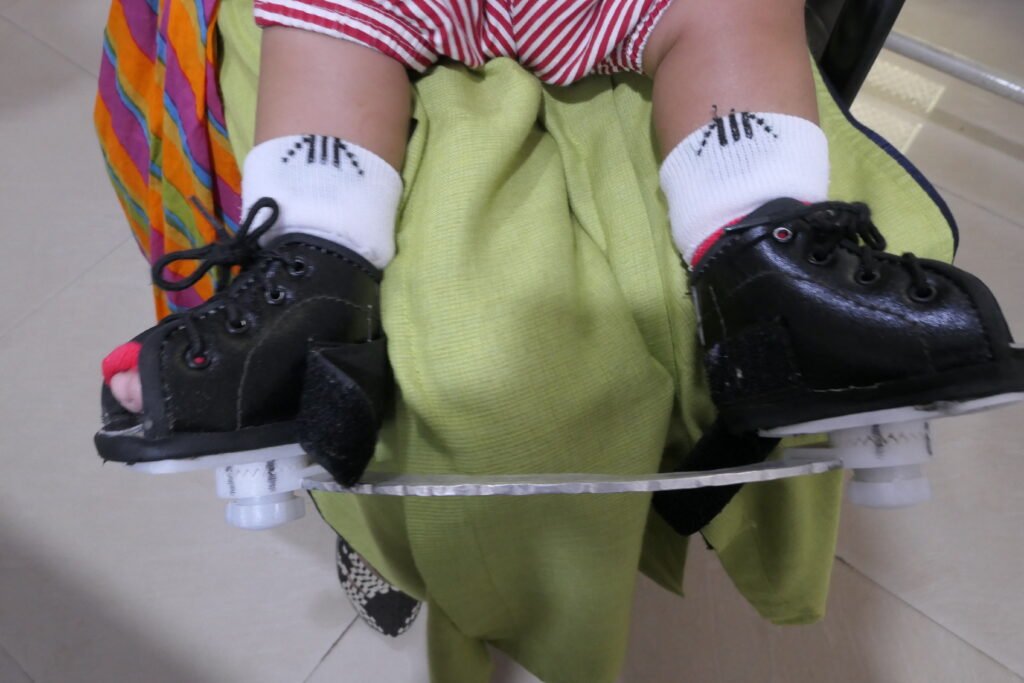
Once the casts have corrected the foot, a foot abduction brace — commonly called the Denis Browne boot and bar — is fitted. This is the single most critical phase of the entire treatment programme. The casts correct the foot; the brace keeps it corrected while the bones, ligaments, and muscles mature over the next four to five years of growth.
For the first three months the brace is worn twenty-three hours a day, removed only for bathing. After this it is worn during naps and overnight until the child is four to five years old. When the brace is worn as prescribed, the relapse rate drops to as low as 6%. When it is not, relapse rates can rise to 80% or higher. This is the single most important message I give to every family.
The brace will not delay your child’s development. Children learn to crawl and walk on schedule even while wearing it, and many sleep better in the brace once they have adjusted to it — usually within one to two weeks.
What if the clubfoot comes back?
Even with excellent brace compliance, some children experience a partial relapse during the first four years of life while the foot is still growing rapidly. This is not a failure — it is a known feature of the condition. Catching it early is the key to managing it simply. Early relapses are usually treated with a short fresh course of two to three Ponseti casts, followed by a return to strict bracing. A repeat tenotomy may be needed if the Achilles tightens again. In older walking children who supinate their foot with each step, an anterior tibialis tendon transfer can correct the underlying muscle imbalance driving the relapse.
What does the future look like for your child?
The honest, research-backed answer is: very good. A 2024 long-term study confirmed that children treated with the Ponseti method have better functional outcomes and fewer complications than those treated with extensive surgery in earlier decades. When the brace is worn correctly, the chance that no further treatment is needed is 95%.
Most children treated with the Ponseti method go on to walk normally, run, play every sport, and attend school without restriction. The treated foot may be one to two shoe sizes smaller and the calf muscle on that side may be mildly slimmer — but these are cosmetic differences that rarely affect function or quality of life in any meaningful way.
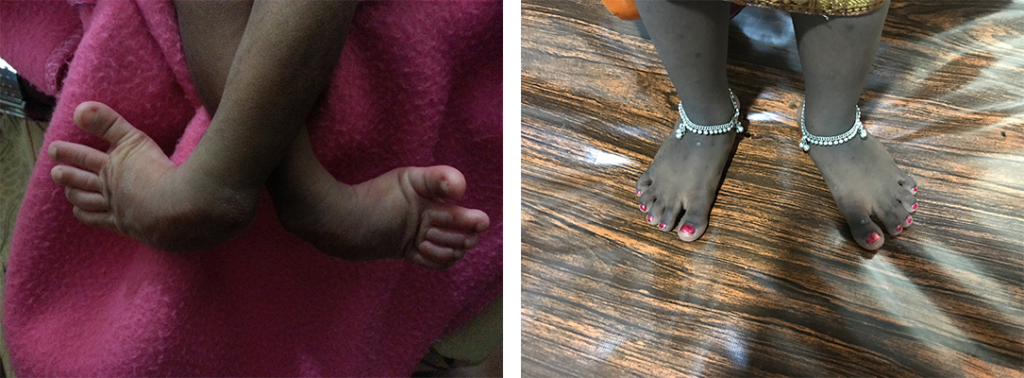
Bilateral CTEV, post correction, followup at 8 years
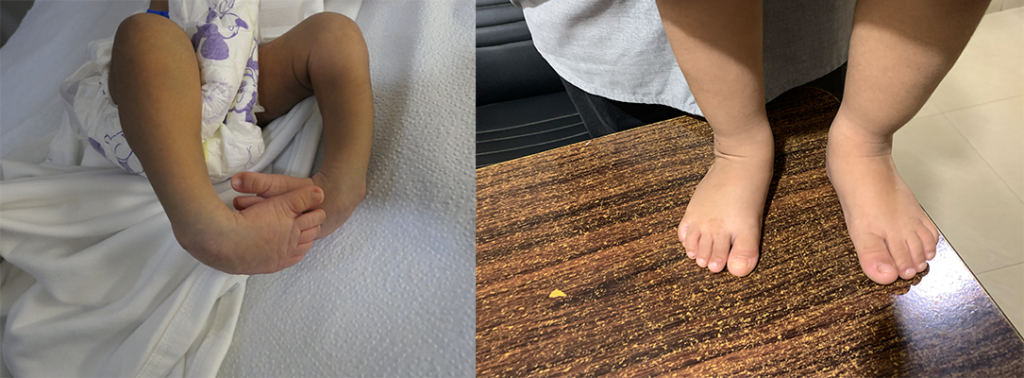
Bilateral CTEV , Post correction at 6 years